The short answer
Quick answer
LVT and LVP are the same product in two different shapes. LVP (luxury vinyl plank) is cut into long planks that look like wood. LVT (luxury vinyl tile) is cut into squares or rectangles that look like stone or ceramic. Same waterproof vinyl core, same wear layer, same durability. The real difference is the look you want and the room you want it in. Plank-format LVP is what most DMV homeowners put down for a whole-floor wood look. Tile-format LVT is what we use in bathrooms, entries, and laundry rooms when you want a stone or slate look without the cold, cracking, and cost of real tile. One thing to know up front: LVT often costs a little more to install because tile patterns take longer to lay than straight planks.
People walk into this comparison thinking LVT and LVP are rivals, like hardwood versus laminate. They are not. They come off the same factory lines, from the same brands, in the same core constructions. If you have already read our WPC vs SPC guide, you know the core is what actually drives performance, and both LVT and LVP come in both cores. So this is not really "which is better." It is "which shape fits the room, and what does each cost to install." After 20-plus years putting vinyl down in Alexandria, Arlington, Fairfax, and across the DMV, here is the honest breakdown.
LVT and LVP are the same material, two shapes
Quick answer
LVT (luxury vinyl tile) and LVP (luxury vinyl plank) are both luxury vinyl flooring. Both are built the same way: a printed design layer that mimics wood or stone, a clear wear layer on top, and a rigid or semi-rigid core underneath. The only structural difference is the cut. LVP comes in wood-length planks; LVT comes in tile-shaped squares and rectangles.
Think of "luxury vinyl" as the material and "plank" or "tile" as the format. A single manufacturer will offer the exact same collection, same wear layer, same core, in a plank that looks like oak and a tile that looks like travertine. Nothing about the vinyl itself is different. Both are 100% waterproof. Both click together and float over the subfloor, or glue down, depending on the product and the room (we cover that call in our glue-down vs floating LVP guide).
Because they share a core, they also share the one spec that actually matters for how long the floor lasts: the wear layer. A 12-mil wear layer wears the same whether it is on a plank or a tile. If you take one thing from this article, take that, and then read our wear layer guide before you shop either format.
LVT vs LVP at a glance
Quick answer
The differences are almost all about shape and look, not performance. LVP wins for wood-look and whole-floor jobs. LVT wins for stone-look and wet or high-traffic rooms where you want a tile aesthetic. Durability and waterproofing are the same for the same core and wear layer.
| LVP (luxury vinyl plank) | LVT (luxury vinyl tile) | |
|---|---|---|
| Shape | Long wood-length planks | Squares / rectangles |
| Mimics | Hardwood, wide-plank wood | Stone, slate, marble, ceramic |
| Core options | WPC or SPC | WPC or SPC (same as LVP) |
| Waterproof | Yes | Yes |
| Grout option | No | Optional (groutable lines available) |
| Best rooms | Living areas, bedrooms, basements, whole floors | Bathrooms, entries, laundry, mudrooms |
| Install labor | Faster (straight runs) | Slower (tile layout, optional grout) |
| Feel underfoot | Warmer, softer than tile | Warmer, softer than tile |
What each one looks like
Quick answer
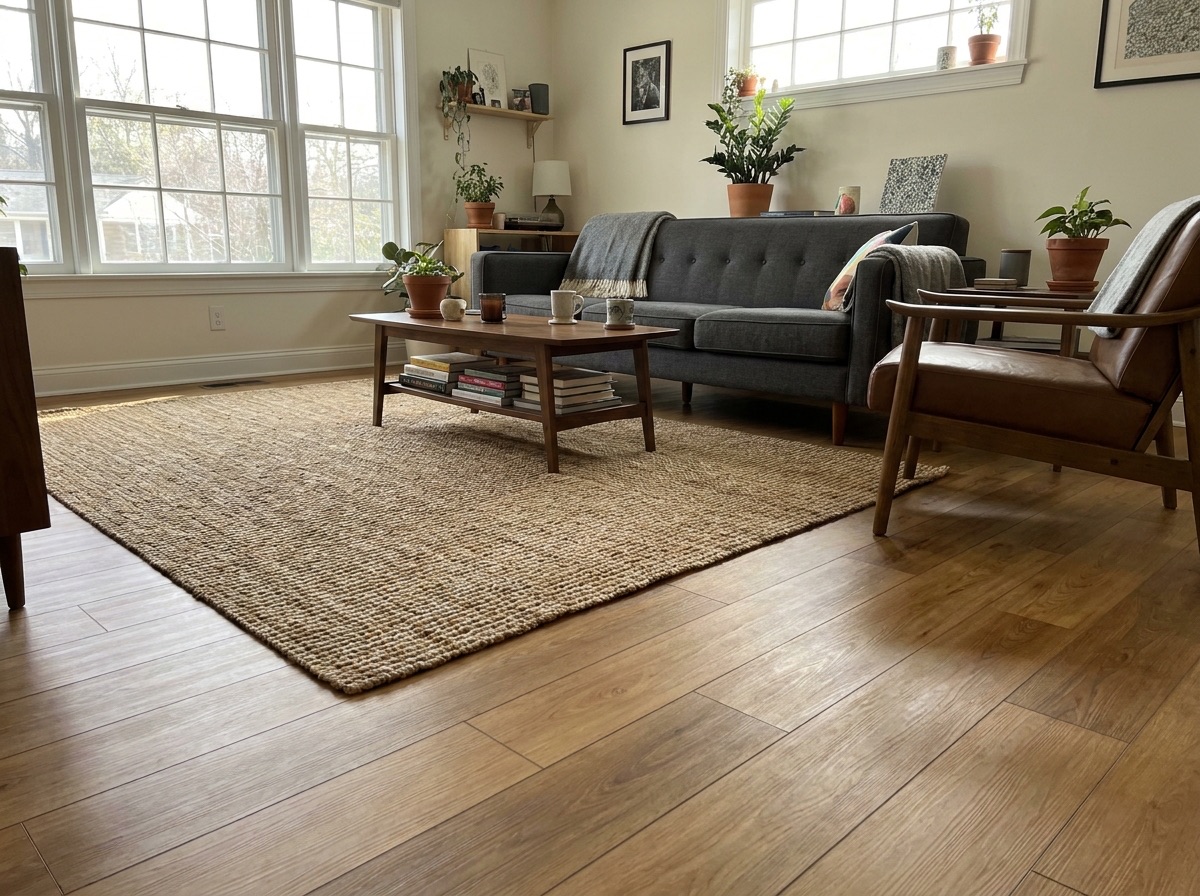
LVP is built to look like wood, and modern LVP does it convincingly, with realistic grain, beveled plank edges, and matte finishes. LVT is built to look like stone or ceramic, and it is at its most believable when you add grout between the tiles. If you want your floor to read as wood, pick LVP. If you want it to read as stone or slate, pick LVT.
This is where the choice usually gets made, and it is a design decision, not a durability one. A DMV colonial or townhome with a warm, traditional feel almost always wants the wood look, so LVP is the default. A modern bathroom, a slate-look entry, or a laundry room where you want the floor to feel like stone is where LVT earns its place.
The realism gap has closed a lot in the last few years. Good LVP has embossed-in-register texture, meaning the grain you see lines up with the texture you feel. Good LVT, especially the groutable kind, is genuinely hard to tell from real stone until you touch it and notice it is warm and slightly soft. Cheap versions of either look like plastic, which is why the wear layer and the print quality matter more than the plank-versus-tile question.
💡 Key takeaway
Pick the format by the look you want, not by a durability myth. LVP for wood, LVT for stone. Then spend your attention on the core (SPC for basements and wet rooms) and the wear layer (12-mil-plus for busy DMV households), because those are what actually decide how the floor holds up.
Is one more durable than the other?
Quick answer
No. For the same core and the same wear layer, LVT and LVP are equally durable and equally waterproof. What changes durability is the wear layer thickness and the core type, not whether the piece is a plank or a tile. A 20-mil SPC plank and a 20-mil SPC tile will hold up the same.
We get asked this constantly, usually because someone assumes the tile shape makes LVT "tougher," the way real ceramic is harder than wood. That logic does not carry over to vinyl. It is the same material either way. A bathroom tiled in LVT is not more waterproof than the same bathroom in LVP; they are both fully waterproof.
The one real-world nuance: LVT with grout lines has more seams than LVP, and any seam is a place where water could theoretically get to the subfloor over years of standing moisture. In practice, a properly installed floating floor over a flat, sealed subfloor handles this fine, and the vinyl grout used with LVT is a flexible urethane product, not porous cement. But it is why we are careful about subfloor prep in wet rooms, LVT or LVP.
What LVT and LVP cost in the DMV
Quick answer
At Potomac Floors, our all-in LVP price is $6.50 per square foot, which covers the material, professional installation, and demo and removal of your old floor. Plain (non-groutable) LVT installs at roughly the same all-in range because the material cost is similar. Groutable or patterned LVT costs more per square foot because the layout and grouting take significantly more labor. We quote LVT after seeing the pattern and room.
The material itself is priced similarly between LVT and LVP within the same product line, so the cost difference is almost entirely labor, which we break down in the next section. For a full material-cost picture, our vinyl plank installation cost guide walks through the per-square-foot ranges and what pushes them up or down.
One number worth keeping in view: our $6.50 all-in LVP price already includes tearing out and hauling away your old floor. Big-box quotes usually list a low material price and then add install, underlayment, demo, disposal, and trim as separate lines, which is how a "$3 a foot" floor becomes $9 or $10 by the time it is on the ground. Our hidden charges guide shows exactly where those add-ons hide.
Why LVT usually costs more to install
Quick answer
Tile-format LVT takes longer to lay than straight-run LVP, so labor runs higher. Planks go down in long, fast rows. Tiles have to be aligned in a grid, often need a diagonal or offset pattern, and if the product is groutable, each seam gets grouted and cleaned by hand. More cuts, more layout time, more steps equals more labor cost per square foot.
Here is the practical reality from the crew's side. On a whole-floor LVP job, we can move fast: snap a line, run planks wall to wall, cut around the edges. A tile grid is a slower job. Every tile has to sit square to its neighbors, small errors compound across a room, and a stone-look LVT often looks best on a diagonal, which means more angled cuts and more waste. Add groutable joints and you have a second full step: grout every seam, then clean the haze off before it sets.
None of this makes LVT a worse choice. It is the right choice for the rooms it suits. It just means the honest answer to "why is the LVT quote higher than the LVP quote" is labor, not a markup. That is also why we price LVT per project instead of posting a flat per-foot number: a straightforward stacked-brick LVT layout in a small powder room is one thing, a diagonal groutable slate look in a big entry is another.
Groutable LVT: the tile look without the tile problems
Quick answer
Groutable LVT uses real grout lines between the tiles, which makes it look almost identical to ceramic or stone tile. The grout is a flexible urethane product, not cement, so it does not crack the way traditional grout does, and the floor stays warm, soft, and fully waterproof. It is the closest vinyl gets to passing for real tile, and it is why we recommend LVT over LVP when you want a true stone or ceramic look.
This is the feature that makes LVT worth the extra labor for the right room. Ungrouted LVT tiles butt together with a tight seam, which looks like vinyl. Add grout and the illusion jumps: real, recessed grout lines are what your eye reads as "tile." Because the grout is flexible urethane, it flexes with the floating floor instead of cracking like the cement grout in a real tile job, which is one of the most common complaints we fix on aging ceramic (see our tile grout guide).
So a groutable LVT floor gives you the tile aesthetic, the warmth and give of vinyl underfoot, full waterproofing, and no cracked grout to re-seal every couple of years. For a DMV homeowner who loves the look of a slate mudroom or a marble-look bath but does not want cold, hard, crack-prone ceramic, this is often the sweet spot.
Where we use each in DMV homes
Quick answer
We use LVP for whole-floor wood-look jobs: living areas, bedrooms, hallways, and basements. We use LVT for the rooms where a stone or ceramic look fits better: bathrooms, entries, mudrooms, and laundry rooms. In many DMV homes we use both, LVP through the main living space flowing into LVT in the entry or bath, matched in color family so the transition reads on purpose.
| Room | Our usual pick | Why |
|---|---|---|
| Living room, bedrooms, hallways | LVP | Wood look, fast install, flows through open floor plans |
| Basement over slab | LVP (SPC core) | Waterproof wood look for DMV below-grade moisture |
| Full and powder baths | LVT (groutable) | Stone/ceramic look, warm underfoot, no cracked grout |
| Entry / foyer | LVT | Slate or stone look reads as a real entry floor |
| Mudroom / laundry | LVT | Tile aesthetic, waterproof, hides grit between cleans |
| Whole first floor | LVP, or LVP + LVT | Wood main areas, stone-look accents in wet rooms |
DMV basements are the clearest case for LVP specifically: below-grade rooms deal with slab moisture and humidity swings, so we spec an SPC core either way, and most homeowners want the warm wood look down there rather than stone. Our best flooring for basements guide covers that call in depth. For wet rooms, the best flooring for bathrooms guide walks through why groutable LVT often beats both LVP and real tile.
⚠ Watch out
If you are running LVP and LVT in adjoining rooms, plan the color family and the transition before anything is ordered. A wood-look plank flowing into a stone-look tile can look intentional and high-end, or it can look like two jobs that met in a doorway. We pick the colors together and set a clean transition strip at the threshold so it reads as a design choice. Our transitions guide covers how we handle the seam between two floors.
LVT vs real tile: when to skip the ceramic
Quick answer
Choose groutable LVT over real ceramic or stone tile when you want warmth and give underfoot, a faster and cheaper install, and no cracked grout to maintain. Choose real tile when you want maximum hardness, heat resistance (right up to a wood stove or in a high-heat mudroom), or the resale signal that genuine tile still carries in some higher-end DMV homes.
This is the comparison LVT is really competing in. Most people choosing LVT are deciding between it and actual ceramic or porcelain, not between it and LVP (and if you are weighing plank-format vinyl against real tile, our luxury vinyl plank vs tile guide covers that head-to-head). The case for LVT is comfort and cost: it is warmer and softer to stand on, it installs faster with less mess, it will not crack if something heavy drops on it, and the flexible grout does not fail like cement grout does. If you have ever stood on a cold ceramic bathroom floor on a January morning in Arlington, the warmth argument sells itself.
Real tile still wins on a few fronts: it is harder and more heat-tolerant, and in some higher-end homes genuine stone or porcelain carries a resale premium that buyers notice. If that matters for your house, our flooring and resale value guide is worth a read, along with our porcelain vs ceramic breakdown for when you do want the real thing.
FAQs about LVT vs LVP
Is LVT or LVP better?
Neither is better overall. They are the same vinyl material in different shapes. LVP is better for a wood look and whole-floor jobs; LVT is better for a stone or ceramic look in bathrooms, entries, and laundry rooms. For the same core and wear layer, they are equally durable and equally waterproof.
What is the difference between LVT and LVP?
The difference is the cut and the look. LVP (luxury vinyl plank) comes in long, wood-length planks that mimic hardwood. LVT (luxury vinyl tile) comes in squares or rectangles that mimic stone or ceramic. Same waterproof core, same wear layer, same brand collections, just plank versus tile format.
Is LVT more expensive than LVP?
The material costs about the same within a product line, but LVT usually costs more to install. Tile layouts take longer than straight plank runs, often need diagonal or offset patterns, and groutable LVT adds a full grouting step. So the higher LVT quote is labor, not a markup. Our all-in LVP price is $6.50 per square foot including demo and removal.
Does LVT need grout?
Not always. Some LVT installs with tight, ungrouted seams, and some is designed to be grouted. Groutable LVT uses a flexible urethane grout that makes it look almost identical to real tile without the cracking. If you want the true tile look, groutable LVT is the way to get it.
Is LVT waterproof like LVP?
Yes. Both LVT and LVP with a modern vinyl core are 100% waterproof. That is why we use LVT confidently in bathrooms and laundry rooms. The grout used with groutable LVT is a waterproof flexible product, not porous cement, so it does not let water through the way real tile grout can if it fails.
Can you mix LVT and LVP in the same house?
Yes, and it often looks great. A common DMV setup is wood-look LVP through the living areas flowing into stone-look LVT in the entry, bath, or mudroom. The key is choosing the colors together and setting a clean transition at the doorway so it reads as intentional. We plan both floors as one job when you do this.
Is LVT a good replacement for ceramic tile?
For most homeowners, yes. Groutable LVT gives you the tile look with warmth and give underfoot, a faster cheaper install, full waterproofing, and no cracked grout to re-seal. Real tile still wins on hardness, heat resistance, and resale premium in some higher-end homes, so it comes down to what you value in that room.
Bottom line
LVT and LVP are not really competitors. They are the same waterproof vinyl in two shapes, and the choice comes down to the look you want and the room you want it in. Want a wood look across your living space or basement? That is LVP, and our all-in price of $6.50 per square foot puts a warm, waterproof wood floor down for a fraction of what real hardwood costs. Want a stone or ceramic look in a bath, entry, or mudroom, without the cold and the cracked grout of real tile? That is groutable LVT, priced per project because the layout and grouting drive the labor. In a lot of DMV homes the right answer is both, matched in color and joined with a clean transition. If you are in Alexandria, Arlington, Fairfax, or anywhere in the DMV and want a straight recommendation for your rooms, get a free in-home quote and we will tell you exactly which format fits where, and what it costs all in.