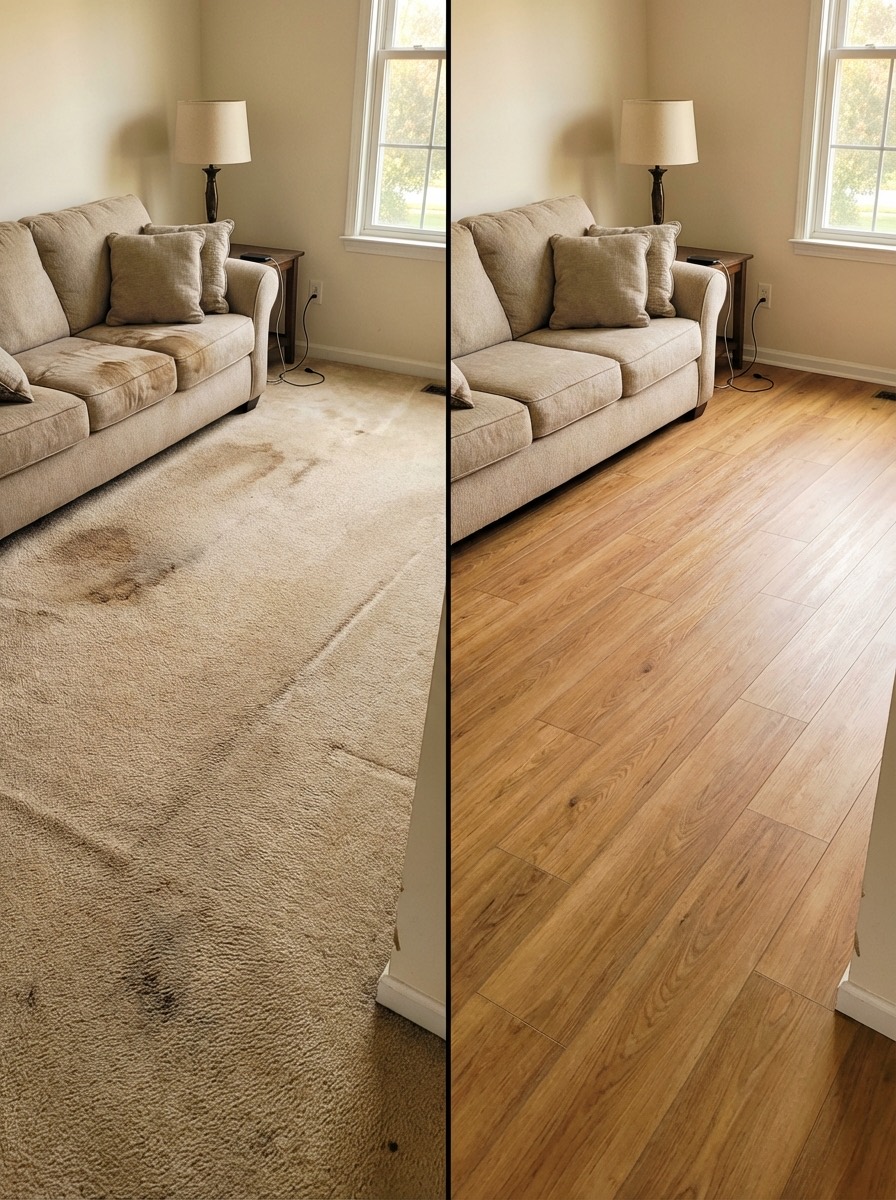
The short answer
Quick answer
Carpet is cheaper up front, softer, and quieter. Vinyl plank is tougher, waterproof, easier to clean, and lasts two to three times as long. For most of a house, luxury vinyl plank is the better buy, because it survives water, pets, and heavy traffic and does not need replacing every several years. Carpet still earns its spot in bedrooms, where comfort and quiet matter more than durability. The honest answer for a lot of DMV homes is both: LVP through the living areas and basement, carpet in the bedrooms.
I install both of these floors every week across Alexandria, Arlington, Fairfax, and the rest of the DMV, and I have no reason to push you toward one over the other. We do both with our own in-house crew, so this is a straight comparison, not a sales pitch for whichever pays more. People framing it as carpet versus vinyl plank usually think it is a cost fight. It is really a room fight. The right question is not "which floor is better," it is "which floor is better for this room, in this house, for how long you plan to stay." Here is how they actually compare on the things that matter, and where each one wins.
What each one really costs, all-in
Quick answer
Our all-in carpet is $3.25 a square foot, which covers the carpet, the padding, professional installation, and hauling your old carpet away. Our all-in luxury vinyl plank is $6.50 a square foot, covering the plank, professional installation, and demo and removal of the old floor. Carpet is cheaper to put in. Vinyl plank is cheaper to own, because it lasts far longer and you are not paying to replace it every several years.
Start with the number, because that is where most people start. Our carpet is $3.25 a square foot all-in: the carpet, the padding under it, the install, and removal of your old carpet, one price with nothing added later. Our luxury vinyl plank is $6.50 a square foot all-in: the plank, the professional install, and demo and removal of whatever is down now. So carpet runs a bit under two-thirds the cost of LVP to put in. That gap is real and it matters if you are furnishing a whole house or turning a rental fast. But the sticker price only tells you the install cost, not the ownership cost. A carpet you replace two or three times over twenty years is not cheaper than a vinyl floor you install once, and that is the calculation the store tag never shows you. For the full breakdown of what goes into a carpet number, our carpet installation cost guide lays it out, and the pad you choose changes both comfort and lifespan more than people expect, which is covered in the carpet padding guide.
Carpet vs vinyl plank at a glance
Quick answer
Carpet wins on upfront price, comfort, and sound. Vinyl plank wins on lifespan, water resistance, cleaning, and resale value. There is no single winner, because they are good at opposite things. The edge column below is the quick read, but the room you are flooring decides which edges you actually care about.
| Factor | Carpet | Vinyl plank | Edge |
|---|---|---|---|
| All-in price | $3.25/sq ft | $6.50/sq ft | Carpet |
| Lifespan | Around 8 to 12 years | Around 20 to 25 years | Vinyl plank |
| Water | Absorbs, can mold | Waterproof | Vinyl plank |
| Comfort underfoot | Soft and warm | Firm, warmer with underlayment | Carpet |
| Sound | Absorbs footfall | Quieter with good underlayment | Carpet |
| Cleaning | Vacuum plus periodic deep clean | Sweep and damp mop | Vinyl plank |
| Pets and kids | Stains and traps dander | Wipes clean, scratch-resistant | Vinyl plank |
| Resale value | Expected in bedrooms only | Preferred in living areas | Vinyl plank |
Read the edge column and the pattern is plain: carpet wins the comfort factors, vinyl plank wins the durability and money factors. That is why the choice comes down to the room, not the product. A bedroom cares about the things carpet is good at. A kitchen or a basement cares about the things vinyl plank is good at.
Durability, lifespan, and water
Quick answer
Carpet in a home lasts roughly 8 to 12 years before it mats down, stains, or looks tired, and less in a busy or pet-heavy house. Good vinyl plank lasts roughly 20 to 25 years and shrugs off scratches, spills, and standing water because its core is solid waterproof vinyl. Over twenty years you replace carpet two or three times and lay LVP once, which is what closes the price gap and then some.
This is where the two floors split hardest. Carpet wears from the top down: fibers crush, traffic lanes darken, spills set into stains, and even a well-kept carpet starts to look tired somewhere around a decade, sooner in a house with kids, dogs, or heavy use. It is a floor with a clock on it. Vinyl plank does not wear that way. A quality plank with a real wear layer resists scratches and dents, and because the core is solid waterproof vinyl, water is simply not on its list of enemies. Spills, a wet mop, a pet accident, a pipe that lets go in the night, the floor does not care. That waterproofing is the single biggest reason LVP has taken over the active parts of the house, and it is the whole story in a basement. How long it actually lasts once it is in is covered in how long vinyl plank lasts, and if you want the twenty-year money picture against real wood, our LVP vs hardwood lifetime cost breakdown does that math.
⚠️ Watch out
Carpet and water do not mix, and in a basement that is not a small thing. Carpet over a below-grade slab traps moisture against the pad, and in our humid summers that is how you grow mildew and that musty smell you cannot get out. If there is any chance of moisture, carpet is the wrong floor for that room. This is the mistake we get called to tear out most.
Comfort, warmth, and sound
Quick answer
Carpet is the clear winner on bare-foot comfort, warmth, and quiet. It cushions every step, holds heat, and soaks up footfall and echo, which is why bedrooms and upstairs rooms feel cozier with it. Vinyl plank is firmer and cooler by nature, but a quality underlayment under it, which we put on every job, adds real cushion and cuts noise, closing most of the gap. Most, not all: nothing feels like carpet under bare feet.
Here carpet gets its win back, and it is a real one. Carpet is soft, it holds warmth, and it kills sound. Step out of bed onto carpet on a January morning and you feel the difference from a hard floor immediately. It absorbs footfall and echo, so a carpeted bedroom or a carpeted upstairs is simply quieter, which matters in a two-story colonial or a townhouse where someone is always above someone else. Vinyl plank starts firmer and cooler, that is just the nature of a hard surface. But it is not the cold, loud floor people picture, because we put a quality underlayment under every LVP install, and a good underlayment adds cushion underfoot and knocks down the click and hollow sound a bare floating floor can have. It closes most of the gap. It does not fully close it, and I will not pretend it does: for pure barefoot comfort in a bedroom, carpet still wins. In a condo or apartment where floor noise is a rule and a courtesy, the underlayment question is worth reading up on in our soundproof flooring for apartments guide, and the role the layer plays under vinyl is in our underlayment guide.
Which floor wins which room
Quick answer
Put vinyl plank in the basement, kitchen, living room, hallways, entry, and any room with water or heavy traffic. Put carpet in bedrooms, and often on stairs for grip and quiet. That split is what we install in most DMV homes: LVP through the main and active areas, carpet in the private, low-traffic, comfort-first rooms. You do not have to pick one floor for the whole house, and you usually should not.
This is the answer that actually helps you, because the real decision is room by room. Vinyl plank belongs in the basement, full stop, for the moisture reasons above, and our basement flooring guide goes deeper on why. It also belongs in the kitchen, living room, dining room, hallways, and entry, anywhere with spills, foot traffic, or pets, because that is exactly what it is built to take. Carpet belongs in bedrooms, where the floor is dry, the traffic is light, and comfort and quiet are the whole point, and picking the right one is its own decision covered in best carpet for bedrooms. Stairs go either way: carpet for grip and to hush the noise, hard surface for looks and wear. The home that gets it right is not all one floor. It is vinyl plank doing the hard work downstairs and in the wet rooms, and carpet making the bedrooms feel like bedrooms. Buyers get that too, which is why a house with hard surface in the living areas and carpet kept to the bedrooms shows better than one carpeted wall to wall, a point our resale value guide gets into.
What this means in a DMV home
Quick answer
Two DMV facts push the answer toward vinyl plank in more of the house than people expect. So many of our basements and ground floors sit on concrete slab, where carpet risks mildew and LVP thrives. And our swing from muggy summers to dry, heated winters is hard on materials, which durable waterproof plank handles better than carpet. Carpet still wins the bedrooms. It just belongs in fewer rooms here than the brochure suggests.
The DMV has a way of settling this argument. First, the slab: a huge share of our basements, condos, and ground-floor rooms sit right on concrete, and concrete gives off moisture for its whole life. Carpet over a slab is a mildew problem waiting for a humid August, while vinyl plank over a proper vapor barrier is exactly right for it. Second, our climate swings hard, from a soaking-humid summer to a dry, heated winter, and that back-and-forth is tougher on a floor than a steady climate is. A waterproof, dimensionally stable plank rides it out better than carpet that traps whatever humidity is in the air. None of this means carpet is a bad floor here. It means carpet's real home in a DMV house is the bedrooms, the dry and quiet rooms, and vinyl plank earns everything downstairs and everywhere water or traffic is in play. When we walk a house, that is almost always the plan we land on, and we will tell you honestly which rooms fall on which side.
The rental and turnover math
Quick answer
For a rental, vinyl plank almost always wins despite the higher install price, because carpet in a rental gets stained and worn and often needs replacing every few tenants, while LVP survives turnovers and cleans up with a mop. The higher upfront number buys you out of a replacement cycle. Many landlords keep carpet only in the bedrooms and run vinyl plank everywhere else to cut turnover cost and headaches.
If this is a rental or a property you turn over, the math tilts hard toward vinyl plank even though it costs more to install. Carpet in a rental takes a beating: stains that do not come out, wear lanes, pet damage, and the smell that lingers, and it commonly needs replacing every few tenants, plus a professional cleaning at each turnover in between. Every one of those is a bill and a vacancy day. Vinyl plank absorbs the abuse, cleans up with a mop between tenants, and does not need replacing on that cycle, so the higher install price buys you out of the recurring one. The move most experienced landlords make is the same hybrid: LVP in the living areas, kitchen, and halls where the damage happens, carpet only in the bedrooms if at all. We lay this out for owners in our best flooring for rental properties guide. For a place you plan to keep and rent for years, LVP's longevity is the whole argument.
FAQs about carpet vs vinyl plank
Is vinyl plank flooring cheaper than carpet?
No, not to install. Our carpet is $3.25 a square foot all-in and our vinyl plank is $6.50, so carpet costs less up front. But LVP lasts roughly two to three times as long, so over twenty years, where you replace carpet a couple of times, vinyl plank is usually cheaper to own.
Is carpet or vinyl plank better for bedrooms?
Carpet, for most people. Bedrooms are dry, low-traffic, and comfort-first, which is exactly what carpet is good at: soft, warm underfoot, and quiet. Vinyl plank works in a bedroom too, and is the better pick if you have pets or allergies, but it will not feel as cozy as carpet on a cold morning.
Can I put carpet in my basement?
We usually advise against it. Most DMV basements sit on concrete slab, which passes moisture upward, and carpet traps that moisture against the pad and grows mildew in our humid summers. Vinyl plank over a vapor barrier is the right call for a basement. If you want softness down there, use area rugs over the LVP.
Which lasts longer, carpet or vinyl plank?
Vinyl plank, by a wide margin. Carpet in a home lasts roughly 8 to 12 years before it mats, stains, or looks worn, and less in a busy house. Quality vinyl plank lasts roughly 20 to 25 years and resists the scratches, spills, and water that wear carpet out.
Is vinyl plank as comfortable and quiet as carpet?
Close, but not equal. Vinyl plank starts firmer and cooler, but the quality underlayment we install under every LVP job adds cushion and cuts noise, closing most of the gap. For pure barefoot softness and sound absorption in a bedroom, carpet still wins. In active rooms, LVP's durability outweighs the comfort difference.
What do most homeowners actually choose?
Both. The common answer in DMV homes is a hybrid: vinyl plank through the basement, kitchen, living areas, and hallways where water and traffic live, and carpet kept to the bedrooms for comfort. You do not have to floor a whole house in one material, and for most homes you get a better result if you do not.
Bottom line
So, carpet or vinyl plank? Carpet is cheaper to install, softer, and quieter, and it belongs in bedrooms and dry, low-traffic rooms where comfort is the point. Vinyl plank costs more up front but lasts two to three times as long, shrugs off water and pets and traffic, cleans up with a mop, and helps resale, which is why it wins the basement, kitchen, living areas, and any rental. For most DMV homes the right answer is not one floor, it is both: LVP doing the hard work downstairs and in the wet and busy rooms, carpet making the bedrooms feel like bedrooms. Our carpet is $3.25 a square foot all-in, our vinyl plank is $6.50 all-in, both with the material, install, and old-floor removal in the one number. Want someone to walk your Alexandria, Arlington, or Fairfax home and tell you honestly which rooms should get which? Get a free in-home quote and we will map it out room by room.