The short answer
Quick answer
Most vinyl plank flooring problems are not the plank. They are a skipped prep step or a floor bought too cheap for the room. Peaking, hollow spots, seams that separate, and cupping under a "waterproof" floor almost always trace back to no expansion gap, an unlevel subfloor, or no vapor barrier over concrete. The material does have real limits: it cannot be refinished, it dents under heavy point loads, and it can fade in strong sun. But installed right on the right subfloor, good LVP is one of the most trouble-free floors we lay in the DMV.
People search "vinyl plank flooring problems" for two reasons: they are about to buy it and want to know the catch, or they already have it and something went wrong. I install luxury vinyl plank across Alexandria, Arlington, Fairfax, and the rest of the DMV every week, and I will give you the honest version of both. Almost everything that gets called an "LVP problem" is really an install or prep problem, and it is preventable. A few things are genuine limits of the material, and you should know those before you buy. Here is the straight breakdown of what actually goes wrong, why, and how to keep it from happening to you.
Most LVP problems are the prep, not the plank
Quick answer
The four failures we get called to fix most are peaking or buckling, hollow spots and a bouncy feel, seams that separate, and cupping from below. None of those is the vinyl failing. Peaking is no expansion gap, hollow spots and separated seams are an unlevel subfloor, and cupping is moisture coming up through concrete with no vapor barrier. Fix the prep and the plank behaves.
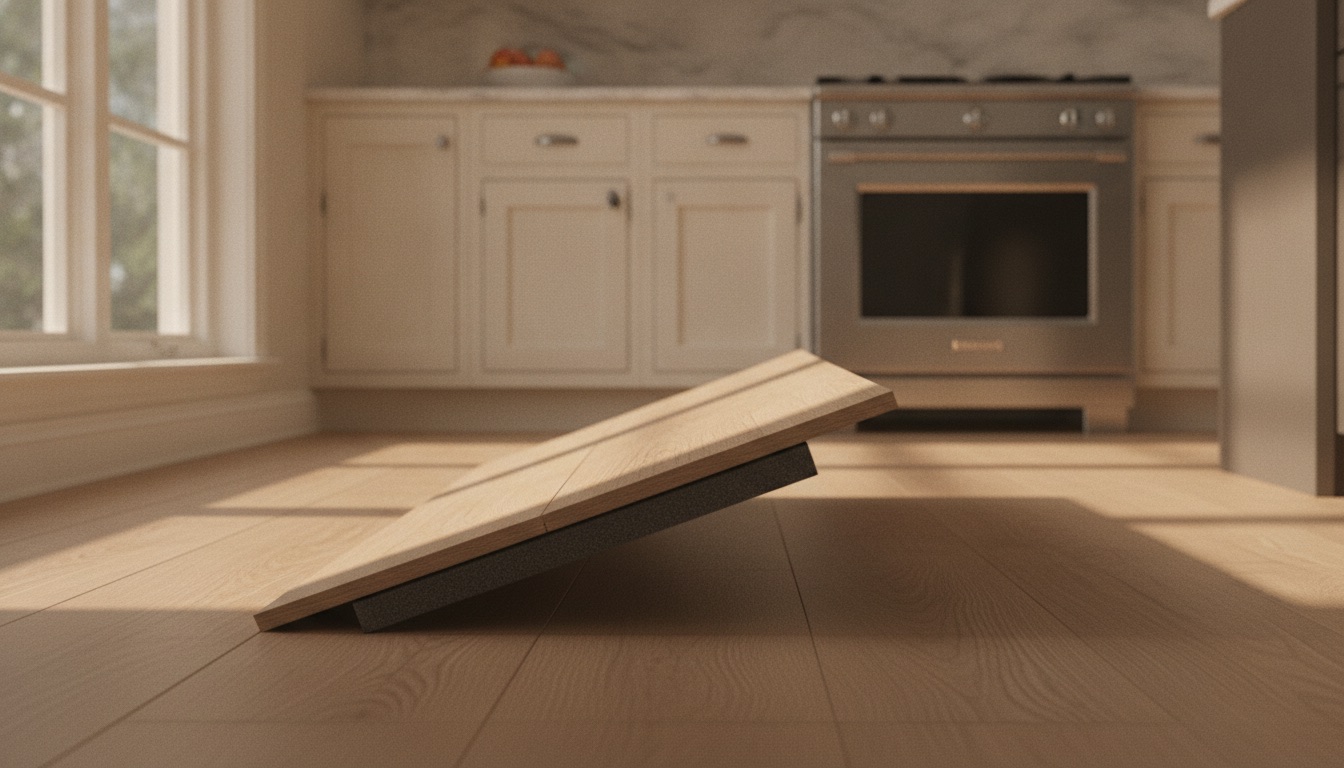
When a vinyl floor goes bad, the top three culprits are all things that happen before or during the install, not the product on the box. Peaking and buckling is the most common. A floating LVP floor expands and contracts with temperature and humidity, and if it was locked tight against every wall with no expansion gap, it has nowhere to go when our summer heat hits, so the seams push up into a ridge. Hollow spots and a bouncy, loud feel come from an unlevel subfloor. Rigid planks bridge a low spot instead of resting on it, so they flex and click underfoot. Seams that separate or lift are the same problem: a floor that flexes over dips works its joints loose over time. Every one of these is a prep miss, and it is why we level the subfloor and leave a proper gap on every job. If you are weighing how the floor is fastened down, our guide on glue-down vs floating LVP explains which method avoids which of these.
⚠️ Watch out
The fourth failure is the sneaky one: cupping or mold under a floor sold as "waterproof." The plank is waterproof, but a bare concrete slab gives off water vapor for its whole life, and with no vapor barrier that moisture gets trapped under the floor. The vinyl is fine; what is under it is not. Over any slab, a 6-mil barrier goes down first. Skip it and "waterproof" works against you.
The common problems, causes, and fixes at a glance
Quick answer
Read the cause column, because almost every one is a prep or buying decision, not a defect. Peaking is a missing expansion gap. Hollow spots are an unlevel subfloor. Separated seams are the same. Cupping is missing a vapor barrier over concrete. Scratches and dents are a thin wear layer or a soft plank picked for the wrong room. The pattern is clear once you see it laid out.
| Problem | Real cause | Prevention or fix |
|---|---|---|
| Peaking / buckling | No expansion gap at the walls | Leave the gap under baseboard; re-lay the edge row |
| Hollow, bouncy spots | Unlevel subfloor | Level the subfloor before install |
| Seams separating | Flex over dips; rushed click-lock | Flat subfloor; proper seating of each plank |
| Cupping / mold below | Slab moisture, no vapor barrier | 6-mil vapor barrier over any concrete |
| Scratches, dents | Thin wear layer or soft plank | Match wear layer to the room's traffic |
| Fading | Strong direct sun | UV-rated plank; shades in south rooms |
The wear-layer line is worth its own note, because it is the one where the plank itself matters most. A thin wear layer is where a cheap floor gives itself away in a year or two of real use. Matching it to the room is the whole game, and our LVP wear layer guide walks through which thickness belongs in a busy kitchen versus a guest bedroom.
The real limits of the material itself
Quick answer
LVP has three honest downsides no install can fix. It cannot be refinished, so a damaged plank gets replaced, not sanded. It dents under concentrated weight like a fridge foot or a piano wheel. And it adds less to a home's resale value than real hardwood. None of these make it a bad floor. They are the tradeoffs for a waterproof, low-cost, low-maintenance floor, and they matter in some rooms more than others.
Now the genuine limits, the ones that are the material and not the crew. You cannot refinish it. Real hardwood can be sanded and recoated several times over decades; when LVP wears through or gets gouged, you replace the affected planks. That is easier than it sounds if you kept a few spare boxes, and it is worth reading how that compares over twenty years in our LVP vs hardwood lifetime cost piece. It dents under point loads. Vinyl is softer than tile or wood, so a refrigerator foot, a heavy piano wheel, or a dropped cast-iron pan can leave a mark that does not bounce back. Felt pads and floor protectors under heavy legs solve almost all of it. It adds less resale value than solid wood. Buyers in Old Town or North Arlington still pay a premium for real oak, and no LVP changes that, which we cover honestly in best flooring for resale value. The cheaper the plank, the more you notice all three, which is the argument for buying a good core and a real wear layer rather than the bargain box; the difference between a WPC and an SPC core is part of that call.
Is vinyl plank flooring toxic or off-gassing?
Quick answer
Like most new building products, fresh LVP can give off a mild smell and some VOCs for the first days after install, which fade with ventilation. The real safeguard is buying certified plank. Look for a FloorScore or GreenGuard Gold label and phthalate-free on the spec sheet. Reputable brands sold in the US meet these; the concern has always been cheap unlabeled imports. Air the room out for a day or two after install and it clears.
This is a fair question and it deserves a straight answer, not a scare or a shrug. Vinyl plank is a PVC-based product, and like new carpet, new paint, or a new mattress, a fresh floor can carry a light smell and release some volatile organic compounds for the first several days as it settles in. That is normal off-gassing and it fades, faster with the windows open and the HVAC running. The way you protect your household is at the buying step: choose plank that carries a FloorScore or GreenGuard Gold certification and lists phthalate-free on the spec sheet. Those labels mean the product was tested for indoor air quality and cleared. The floors that earned vinyl its old reputation were cheap, unlabeled imports with no testing behind them, and those are exactly the ones we steer clients away from. Buy a certified plank from a known maker, ventilate for a day or two after we lay it, and this is a non-issue.
What actually fails in DMV homes
Quick answer
Three local conditions cause most of the LVP failures we see: moisture from concrete basement and ground-floor slabs with no vapor barrier, the wide summer-to-winter humidity swing that moves a floor pinned tight with no expansion gap, and strong sun in south-facing rooms that fades a thin finish. All three are avoidable with the right prep and the right plank, and all three are common when a floor is put in fast and cheap.
The DMV has its own way of finding a floor's weak spot. So many of our basements, condos, and ground floors sit on concrete slab, and concrete passes water vapor upward for its entire life, so skipping the moisture barrier over a slab is the single most common cause of a "waterproof" floor cupping or growing mold underneath. Our humidity runs from a muggy August to a bone-dry January with the heat on, and every floating floor moves with that swing, so a plank pinned tight to the walls with no room to expand peaks and buckles. And the big south-facing windows in a lot of Northern Virginia homes will fade a thin finish over the years. We handle all three at install: a 6-mil vapor barrier over any slab, a real expansion gap at every wall, and a wear layer matched to the room and the light. The same slab logic drives our basement flooring guide, the moisture-barrier detail lives in our underlayment guide, and how long a floor lasts once these are done right is covered in how long vinyl plank lasts.
How to not have these problems
Quick answer
Buy a plank with a real wear layer and a certified core, not the cheapest box. Insist on three prep steps: level the subfloor, a vapor barrier over any concrete, and an expansion gap at the walls. Get one all-in price that includes that prep so it does not get cut to hit a number. Do those and the problems on this page mostly disappear.
Avoiding every issue above comes down to two decisions: the plank you buy and the prep you insist on. On the plank, spend where it counts, a wear layer matched to the room and a certified core, and skip the bargain box that shows its age in a year. On the prep, the three steps that prevent the big failures are non-negotiable: level the subfloor so nothing flexes, lay a vapor barrier over any concrete so slab moisture stays out, and leave an expansion gap at the walls so the floor can move with the seasons. The reason cut-rate installs skip these is that they are the invisible, unglamorous parts of the job, and they are the first things to go when someone quotes a floor cheap. That is exactly why we quote LVP at $6.50 a square foot all-in, one number that covers the material, the professional install, and demo and removal of your old floor, with the prep built in rather than sold back to you later. A floor that never develops these problems is cheaper than a cheap floor that does.
FAQs about vinyl plank problems
What is the biggest problem with vinyl plank flooring?
That it cannot be refinished. Real hardwood can be sanded and recoated for decades, but when LVP is gouged or worn through, you replace the affected planks instead. Keeping a couple of spare boxes from the original install makes that a quick swap rather than a headache.
Why is my vinyl plank floor lifting or peaking?
Almost always no expansion gap at the walls. A floating floor expands with heat and humidity, and if it was locked tight with nowhere to move, the seams push up into a ridge. The fix is to pull the edge row, re-cut the gap under the baseboard, and re-lay it.
Is vinyl plank flooring toxic?
Fresh LVP off-gasses mildly for the first days like most new products, then clears with ventilation. Buy plank certified FloorScore or GreenGuard Gold and listed phthalate-free, air the room out after install, and it is not a health concern. The risk was always cheap unlabeled imports, not certified brands.
Why does my vinyl floor feel hollow or bouncy?
The subfloor under it was not level. Rigid planks bridge a low spot instead of resting on it, so they flex and click when you step. It is a prep failure, not a defect. Leveling the subfloor before installation is what prevents it.
Does vinyl plank flooring scratch and dent easily?
It resists scratches well but dents under concentrated weight, since vinyl is softer than tile or wood. A refrigerator foot or a heavy furniture leg can leave a mark. Felt pads and floor protectors under heavy items prevent almost all of it, and a thicker wear layer helps. Keeping grit and abrasive cleaners off the floor matters just as much, which our guide to cleaning vinyl plank walks through.
Can vinyl plank flooring problems be fixed without replacing the whole floor?
Usually yes. Peaking is fixed by re-cutting the expansion gap on the edge row. A damaged plank is swapped out. Separated seams get re-seated. Only widespread cupping from trapped slab moisture forces a full pull-up, because the real fix is under the floor, not the floor itself.
Bottom line
So, is vinyl plank flooring a problem floor? No. It is one of the most trouble-free floors we install, and nearly every "problem" people run into is a skipped prep step or a plank bought too cheap for the room. Peaking, hollow spots, separated seams, and cupping are all preventable with a level subfloor, a vapor barrier over concrete, and an expansion gap at the walls. The material's real limits, that it cannot be refinished, dents under heavy point loads, and adds less resale value than solid wood, are honest tradeoffs for a waterproof, low-cost, low-maintenance floor, not reasons to avoid it. Buy a good plank, insist on the prep, and get it in one all-in price so the prep never gets cut. Ours is $6.50 a square foot for LVP, material, install, and old-floor removal included. Want a straight read on whether LVP is right for your Alexandria, Arlington, or Fairfax home, and which rooms it fits? Get a free in-home quote and we will tell you where it works and where it does not.