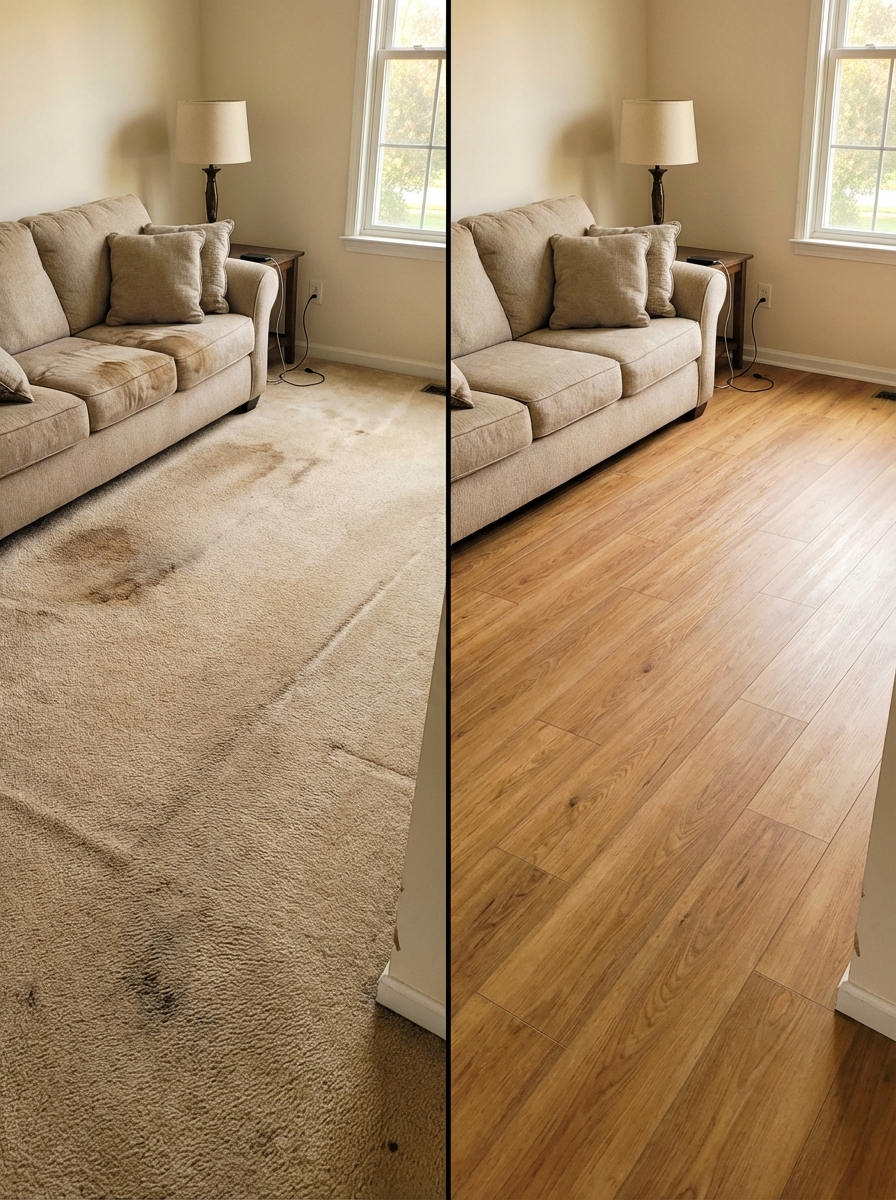

If you have dogs that run laps through the house or cats that knock things off counters at 3 AM, your flooring is going to take damage. That's reality. The question isn't "what flooring is pet-proof". Nothing is. The question is which flooring takes the least damage, looks best after a few years of pet life, and is cheapest to keep nice over a 10-year ownership window.
This is a working DMV installer's take, anchored on what we actually see in pet households across Alexandria, Arlington, Vienna, McLean, Fairfax, Bethesda, and the rest of the metro. Real photos. Real outcomes. Honest trade-offs.
Pet-friendly flooring in the DMV: the short answer
Quick answer
For most DMV pet households, premium LVP at $5-7/sqft is the right call. 20-30 mil wear layer, 100% waterproof, scratch-resistant, no refinishing needed. Engineered hardwood at $8.50/sqft works in adult-pet households (no puppies, no large unclipped dogs) where you're committed to a refinish every 10-15 years. Solid hardwood is fine for cats and small/calm dogs but takes visible damage from large or active dogs. Avoid laminate, soft hardwoods (pine, fir), and any wood with a thin wear layer if pets are part of your daily reality.
Why LVP wins for most pet households
LVP (luxury vinyl plank) is the right answer for most pet families because it solves the three biggest pet-flooring problems at once:
- Scratches. LVP's wear layer is a clear urethane coating engineered specifically to resist scratches. Premium LVP (20-30 mil wear layer) handles dog claws better than any wood floor. Cheap LVP (6-12 mil) does not. Match the wear layer to your pet load, not just the price tag.
- Accidents. Modern LVP with WPC or SPC core is rated 100% waterproof. A puppy accident sitting on the floor for 8 hours while you're at work? No damage. The pee sits, you mop it up, no warping, no staining, no smell trapped in the boards. This is the single biggest reason pet owners pick LVP over wood.
- Cost to replace if needed. Even premium LVP at $7/sqft all-in is cheaper than solid hardwood at $9-11/sqft. If you do somehow destroy a section, replacement is faster and cheaper. Wood requires sanding the whole floor when patched.
💡 Key takeaway
If you're choosing flooring and you have pets, the wear-layer thickness on LVP matters more than any other spec. 6-mil scratches in 3 years. 20-mil holds up for 15+ years. The price difference between cheap and premium LVP is small ($1-2/sqft) compared to the lifespan difference (4-5x). Don't shop on per-sqft alone. See our cost per square foot breakdown for the full math.
When engineered hardwood still works for pet households
Engineered hardwood at $8.50/sqft works for pet households if all three are true:
- Pets are adult and trained. Puppies + house training = LVP. Once the dog is reliably housebroken and the cat is well past kitten claws-everywhere phase, hardwood becomes viable.
- Wear layer is at least 3-4mm. Thin wear layers (1-2mm) don't survive a refinish. If you're going to need to refinish in year 12 because of accumulated micro-scratches, you need wear layer to spare.
- You accept that small scratches will happen and plan to refinish once. A solid 4mm wear layer engineered floor with adult pets typically needs one refinish in years 10-15 to reset the surface. That's $4.50/sqft (per our refinishing vs replacement guide) and resets the floor like new.
Specific scenarios where engineered hardwood is the right call for pet households:
| Pet situation | Engineered hardwood verdict |
|---|---|
| Cats only (any age) | ✅ Works fine. Cats don't scratch hardwood the way dogs do. Verify the cat's claws are kept trimmed and you're set. |
| Small/medium adult dog (under 40 lbs), trained, calm | ✅ Works in living areas. Avoid in rooms where the dog runs (hallways near doors get the worst scratch concentration). |
| Large adult dog (50+ lbs), trained, mellow | ⚠️ Possible with 4mm wear layer + commitment to keeping nails trimmed. Visible scratches accumulate over 5-7 years; expect a refinish in year 10-12. |
| Puppy under 1 year | ❌ Don't. Puppy chewing, accidents, and untrained nail length wreck even good hardwood within 2-3 years. Wait for adulthood, OR install LVP and switch later if desired. |
| Multi-dog household (2+ active dogs) | ❌ Skip hardwood. The compounded scratching pattern shows fast. LVP is the right answer. |
| Senior dog with mobility issues | ⚠️ Consider rugs over hardwood for traction (smooth hardwood is hard for older dogs). Or LVP with grippier finish if dog mobility is the priority. |
What flooring to avoid if you have pets
⚠️ Watch out
Most "pet-friendly flooring" articles online are written by people who don't actually install floors in pet households. They list everything from carpet to bamboo as fine. Reality is narrower. The list below is what we actually steer pet owners away from after 20+ years of installing floors in DMV homes.
Laminate (avoid)
Laminate is wood-look composite covered with a printed photo and clear finish. Looks similar to LVP at a glance. It's not. Laminate's two big pet failures: (1) it's NOT waterproof. Accidents that sit will swell the seams between boards and you can't fix it without replacing the affected section, and (2) cheap laminate scratches faster than even mid-tier LVP because the protective layer is thinner. At the same all-in price, there is no reason to pick laminate for a pet household.
Soft hardwood species (avoid)
Pine, fir, and some softer maples are too soft for pets. Pet nails will dent them with normal walking, not just running. If a contractor is recommending these for a pet household, they're either trying to hit a price point or they don't know your situation. White oak, red oak, hickory, and walnut are the harder hardwoods that survive pet use; pine and fir don't.
Engineered hardwood with thin wear layer (avoid)
1-2mm wear-layer engineered hardwood looks like premium engineered at first glance but can't be refinished and shows scratches almost immediately under pet use. If you're getting a quote that's significantly under $7/sqft for engineered, ask for the wear-layer thickness in writing. Per our solid vs engineered vs LVP comparison, the wear-layer spec is the single most important number on engineered hardwood. Pet households need 3-4mm.
Carpet in main living areas (avoid)
Carpet traps pet hair, holds odors from accidents (even cleaned ones), and accumulates dander that triggers allergies. We pull out carpet in pet households roughly twice a week. It's the most common replacement scenario. Carpet in bedrooms can be fine if pets don't sleep there. Carpet in main living areas where pets spend most of their time is a recurring expense, not a permanent floor.
Scratch resistance by material (real-world ranking)
From most scratch-resistant to least, based on what we see in DMV pet households after 5-10 years of use:
- Premium LVP (20-30 mil wear layer): Effectively scratch-proof under normal pet use. The wear layer is engineered for commercial-grade traffic. Will eventually scuff after 15+ years but not "scratched."
- Mid-tier LVP (12-20 mil wear layer): Resists scratches well for residential pet use. Light surface scuffs accumulate over 8-10 years.
- Engineered hardwood with hard top species (white oak, hickory): Surface scratches accumulate but the wood underneath is intact. A refinish removes scratches and resets the floor.
- Solid hardwood (white oak, red oak, hickory): Same as above but with thicker wear material. More refinishes available over the lifetime.
- Solid hardwood (maple, walnut): Slightly softer than oak, scratches a bit faster.
- Cheap LVP (under 12 mil wear layer): Scratches in the first 2-3 years. Avoid for pet households.
- Laminate: Scratches and chips, can't be refinished. Avoid.
- Pine, fir, bamboo: Dents from claws under normal walking. Avoid.
Moisture, accidents, and floor damage from pets
Scratches are the obvious pet flooring problem. Moisture is the silent one, and it's worse. If you already have pet scratches in an existing hardwood floor and you're trying to decide whether to fix them, refinish, or replace, our hardwood scratch repair decision guide walks through the 4 damage levels and the right call for each, including the pet-specific decision tree for when claw damage means a Bona Pro recoat vs a full sand-and-refinish vs replacement.
A puppy accident on hardwood that sits for 6 hours can permanently stain the boards. The urine penetrates the finish and into the wood grain. Sanding can sometimes remove the stain; sometimes it can't. The discoloration goes deeper than the wear layer. Either way, you're replacing the affected board or living with the spot.
The same accident on waterproof LVP: mop it up, done. No staining, no smell trapped in the boards, no permanent damage. This is why we strongly recommend LVP in any room where pets eat, drink, or get into the house from outside. Mudrooms with the dog door are nearly always LVP.
Vomit is another silent killer. Stomach acid penetrates wood faster than urine and can leave a permanent dark mark even on sealed hardwood. Same prevention: catch it fast, blot it up, never let it sit. Same forgiveness on LVP: mop it up, no damage.
4 things that ruin floors faster than pets ever do
This is the section most pet-flooring articles miss. Pet damage is real, but for many DMV homes it's not the biggest threat to the floor's life. The four bigger threats:
1. High heels and rolling chair casters
A dress shoe with a small heel concentrates 5-10x the pressure-per-square-inch of a 70 lb dog standing still. A rolling office chair with hard-plastic casters wears a track into hardwood within 18 months. Much faster than any pet does. If you work from home with a desk chair on hardwood, get a chair mat or felt pad the casters. Don't blame the pets.
2. Dragging furniture
Moving a couch across hardwood without lifting it gouges the floor instantly. Felt pads on every furniture leg. Pets contribute zero to this damage; the homeowner does.
3. Refrigerator water-line leaks
The slow drip from a fridge water line that nobody notices for weeks because the appliance covers it. Whole sections of hardwood underneath swell, warp, and need replacement. Affects waterproof LVP much less. Check fridge connections annually.
4. Sun damage / UV fading
Direct sunlight through south-facing windows fades hardwood unevenly over years. Boards near the window go lighter; boards under the rug stay darker. Eventually you have a visible color shift. Window film or UV-blocking glass treatment fixes this; rotating rugs every 6 months redistributes the fade. LVP is more UV-stable but premium LVP can still fade slightly over 10+ years of direct sun.
For all 4 of the above, the issue isn't the pet. It's normal home use. Pets typically rank fifth or sixth in real "what damaged this floor" forensics. So pick the floor that solves THE PET problems (scratches + accidents) but don't let pet anxiety drive the entire decision.
Cost by pet-friendly material in the DMV
| Material | All-in cost (DMV, 2026) | Pet household lifespan | Refinishable? |
|---|---|---|---|
| Premium LVP (20-30 mil) | $6-7/sqft | 15-20 years | No (replace when worn) |
| Mid-tier LVP (12-20 mil) | $5/sqft | 10-15 years | No |
| Engineered hardwood (3-4mm wear layer, hard species) | $8.50/sqft | 15-25 years (with 1 refinish) | Yes, 1 refinish |
| Solid hardwood (white oak, red oak, hickory) | $9-11/sqft | 25-50 years (with 2-3 refinishes) | Yes, 6+ refinishes |
| Engineered hardwood (1-2mm wear layer) | Often quoted under $7/sqft | 5-8 years before visible damage | No (too thin) |
| Laminate | $3-5/sqft | 5-7 years in pet household | No |
For exact costs by room size (200, 400, 1,000, 2,000 sqft) and the all-in pricing math, see hardwood floor installation cost per square foot in 2026. For the per-line-item breakdown of what's hidden in low quotes (especially relevant if you're getting a quote that's "too good to be true" on engineered hardwood), see what's hidden in a flooring quote.
FAQs about pet-friendly flooring in Northern Virginia
Do dog nails actually scratch hardwood floors?
Yes. Untrimmed nails on a 50+ lb dog scratch hardwood within months. Trimmed nails on the same dog cause minimal damage. The single biggest factor in whether a hardwood floor survives a dog is whether the dog's nails are kept short. A trim every 4-6 weeks is enough.
Is bamboo flooring pet-friendly?
Strand-woven bamboo is harder than oak and works for some pet households. Other types of bamboo (horizontal, vertical) are softer than oak and dent under pet use. Strand-woven costs $7-9/sqft installed. We don't typically recommend bamboo for DMV homes because of humidity sensitivity, but if you specifically want bamboo with pets, only strand-woven.
What flooring is best for senior dogs with mobility issues?
LVP with a slightly textured finish gives older dogs better traction than smooth hardwood. Avoid high-gloss finishes that get slippery. Carpet in the dog's main resting area is fine for traction even if it's bad for hair management. Our best flooring for dogs guide goes deeper on traction, size, and age.
Will pet insurance cover floor damage?
No, pet insurance covers pet medical care, not property damage caused by pets. Homeowner's insurance generally doesn't cover wear-and-tear pet damage either (only sudden incidents like a one-time flood from an aquarium break, not accumulated scratches). Plan for the floor cost without insurance offsetting it.
Should I get area rugs in pet households?
Yes, in main pet zones. Wash-friendly rugs (jute, indoor-outdoor polypropylene) protect the floor and trap hair. Rotate them every 3-6 months to prevent uneven wear and uneven UV fade. Avoid rubber-backed rugs on hardwood (the rubber can leave marks).
Can I install hardwood now and switch to LVP later if it doesn't work out?
Yes. Hardwood-to-LVP conversion is straightforward. Pull the hardwood, prep the subfloor, install LVP. Cost is roughly the same as a fresh LVP install plus the demo of the existing hardwood ($1-2/sqft extra). If you're unsure, hardwood-first is reversible. LVP-first is also fine to convert to hardwood later.
Bottom line: which flooring fits your DMV pet household
For most DMV pet households, premium LVP at $6-7/sqft all-in is the right call. The wear layer handles scratches, the waterproof core handles accidents, and the 15-20 year lifespan means you're not replacing it every 7 years like cheap LVP or laminate.
Engineered hardwood at $8.50/sqft with a 3-4mm wear layer and hard species (white oak, hickory) works for households with adult, calm, trained pets where you're comfortable refinishing once around year 12. Solid hardwood at $9-11/sqft works for cats and small dogs in long-term homes where the floor is a 30+ year asset.
Avoid laminate, soft hardwood species (pine, fir), and any engineered hardwood with a wear layer under 3mm. The cost savings on those don't outlast the pet damage.
If you want the full pricing math by room size, see hardwood floor installation cost in 2026. To compare LVP vs hardwood vs engineered head-to-head with all the trade-offs, see solid vs engineered vs LVP for DMV homes. To make sure your flooring quote is genuinely all-in (this matters more in pet households where you can't afford surprise charges to fix a botched install), see what's hidden in a flooring quote.
Three more pet-household reads: carpet still works for some pet households if you understand the trade-offs (allergens, replacement cycle, padding), our hardwood maintenance guide covers what to do differently when dogs and cats share the floor. The routine that protects finish is slightly different from a pet-free home, and our basement flooring guide covers the right material if pets spend time in a basement playroom or finished basement (basements punish the wrong choice harder than upstairs).