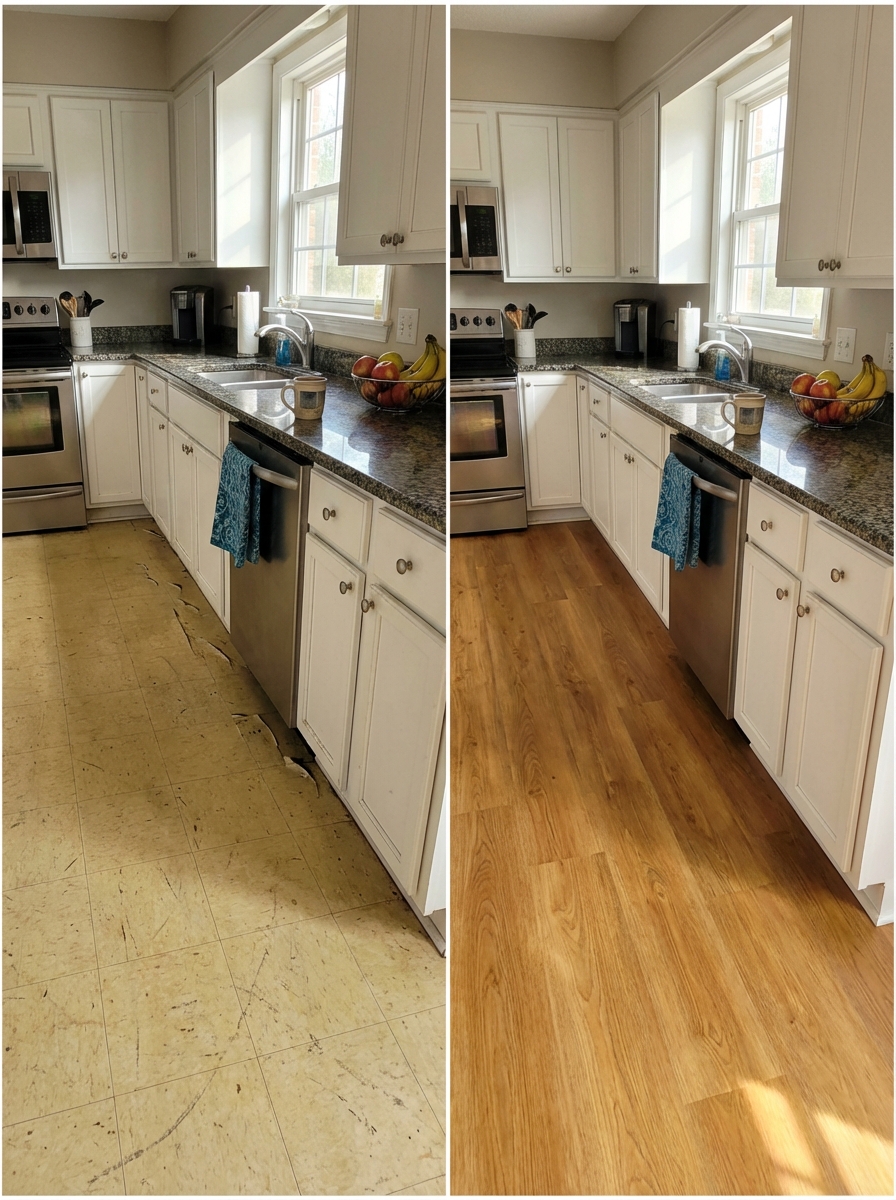

Real hardwood floor maintenance isn't complicated, but the internet is full of bad advice that ruins floors. Steam mops, vinegar mixtures, oil soaps, "natural" cleaners. Half the recommendations damage modern polyurethane finishes. This article tells you what actually works, what to avoid, and when calling a pro saves you money over DIY mistakes.
Hardwood floor maintenance: the short answer
Quick answer
Sweep or dry-mop daily. Damp-mop weekly with a hardwood-specific cleaner (Bona, Method, or similar). Skip vinegar, ammonia, oil soap, steam mops, and Murphy's Oil Soap entirely. Once a year, check for high-traffic wear and reapply a polish or maintenance coat where needed. Every 7-10 years (DMV homes), call a pro for a screen-and-recoat at $1.50-2.50/sqft. It's 80% cheaper than a full sand-and-refinish and resets the wear layer. A full refinish at $4.50/sqft is only needed every 15-25 years if maintenance is on schedule.
Daily and weekly: what to do yourself
Daily (or every 2-3 days)
- Dry sweep or microfiber dust mop. Loose dirt and grit are the #1 enemy of hardwood. Each step grinds particles into the finish like sandpaper. A 60-second sweep daily extends finish life by years.
- Vacuum on hardwood-safe setting. Use the bare-floor mode or a vacuum attachment without a beater bar. Beater bars scratch finish.
- Wipe up spills immediately. Water sitting on hardwood for 30+ minutes can dull finish and start to penetrate. Same-second wipe is the rule.
Weekly
- Damp microfiber mop with hardwood cleaner. Spray cleaner directly on the mop, not the floor. The mop should be damp, never wet. If you can leave a footprint in the dampness, the mop is too wet.
- Move rugs and door mats periodically so wear and UV exposure are even across the floor.
Monthly: cleaners that work and what to avoid
| Use this | Why it works |
|---|---|
| Bona Hardwood Floor Cleaner | pH-neutral, water-based, designed for polyurethane finish. Bona publishes the spec. |
| Method Squirt + Mop Wood Floor Cleaner | pH-neutral, plant-based surfactants. Works on polyurethane. |
| Manufacturer-recommended cleaner | If your floor is from a specific brand (e.g., Mohawk, Bruce, Shaw), their cleaner is engineered for their finish. |
| Plain water on a damp microfiber | Lowest-risk option. Effective for routine cleaning when the floor isn't heavily soiled. |
⚠️ Watch out. Never use these on hardwood
Vinegar/water mix (acid etches polyurethane over time). Murphy's Oil Soap (leaves residue that builds up and dulls finish). Steam mops (heat + moisture + pressure damages even sealed hardwood. Many manufacturers void warranty for steam use). Ammonia-based cleaners (degrade finish). Pine-Sol or general household cleaners (too harsh for polyurethane). The internet pushes vinegar and steam mops constantly; both are wrong for modern hardwood.
Annual: the once-a-year DIY pass
Once a year (we recommend early fall in the DMV, after summer humidity drops), do the following:
- Inspect high-traffic areas: kitchen entry, hallway main path, stair landing, in front of couches. Look for finish wear (slight dullness compared to less-traveled areas), scratches, or any softness.
- Spot-clean any deep stains with a soft cloth and the manufacturer's recommended deep-clean product.
- Tighten any squeaks if you can identify the source, sometimes a few well-placed screws from underneath (basement or crawl) eliminate squeaks without touching the finish.
- Check and replace door mats / area rugs if they're worn. Old mats with hard backing can scratch the floor underneath.
- Apply a polish/maintenance coat IF the manufacturer recommends one for your specific floor. Most modern polyurethane floors don't need this and it can cause buildup. Read your floor's care guide first.
When calling a pro saves money
Three situations where DIY is more expensive than pro help in the long run:
1. Deep scratches or finish damage in high-traffic zones
DIY scratch repair products work for one or two minor scratches. For an entire high-traffic path that's worn through, the right answer is a screen-and-recoat (see next section), not 40 patches that don't blend. For isolated scratch damage, our hardwood scratch repair decision guide walks through the 4 damage levels and the right fix for each. Most homeowners spend more money than they need to because they buy the wrong product for the damage level they actually have.
2. Water damage that's gone past surface
If a spill or leak has darkened the wood (water has penetrated past the finish into the wood itself), DIY won't reverse that. A pro can sometimes spot-repair by sanding and refinishing the affected boards. Full replacement is sometimes the cleaner answer. See our refinishing vs replacement guide for the cost comparison.
3. Pet urine that's been there for weeks
Surface-cleaned cat urine usually comes off. Urine that soaked into wood for days and dried leaves a permanent dark stain that requires sanding the affected boards down past the stain depth. Pro work, not DIY.
Screen-and-recoat: the cheap maintenance trick most homeowners miss
Screen-and-recoat (sometimes called "buff-and-coat") is a process every hardwood owner should know:
Instead of full sand-and-refinish (which removes the entire finish + top layer of wood, costs $4.50/sqft, and takes 3-5 days), screen-and-recoat lightly abrades the existing finish with a screen pad, cleans, and applies one fresh polyurethane coat on top. Cost: $1.50-2.50/sqft. Time: 1 day. Result: floor looks 90% new.
When to do it:
- Finish has dulled in high-traffic zones but no deep scratches show wood underneath
- Floor is between 7-12 years old in a normal-traffic home
- You want to "reset" the floor without major investment
When NOT to do it:
- Deep scratches show bare wood. Needs sanding first
- Cupping, gapping, or major water damage. Needs full refinish or replacement
- Your existing finish is wax-based (rare in modern homes; if your floor is pre-1980 unrefinished, this matters)
💡 Key takeaway
A homeowner who does one screen-and-recoat at year 8 and one full refinish at year 20 will spend about $3,500 over 25 years on a 1,500 sqft floor. A homeowner who skips the screen-and-recoat and does two full refinishes (year 12 + year 22) spends $13,500 over the same 25 years. The simple maintenance schedule is the difference.
DMV-specific: humidity and seasonal hardwood care
Hardwood is hygroscopic. It expands in summer humidity and contracts in winter dryness. The DMV's climate range (70-85% summer / 25-35% winter indoor) stresses hardwood more than mild-climate regions.
What this means for your maintenance schedule:
- Run HVAC humidity control year-round. Target 35-55% indoor humidity per NWFA recommendations. Whole-house humidifier in winter, dehumidifier in summer if HVAC alone doesn't manage it.
- Expect minor seasonal gapping in winter. Boards contract when indoor humidity drops below 35%. Small visible gaps between boards are normal and disappear in summer. Don't fill them with caulk.
- If gaps are wide and don't close in summer, that's not seasonal. Call a pro. Could indicate moisture damage, subfloor issues, or installation problems.
- Avoid scheduling refinishing during peak summer humidity (July-August). Polyurethane cures slower in high humidity and odors linger. Spring or fall is ideal.
FAQs about hardwood floor maintenance
Can I use a Swiffer Wet Jet on hardwood?
Most Swiffer Wet Jet solutions are too aggressive for polyurethane finish over time. The dry Swiffer is fine. For wet cleaning use Bona, Method, or a manufacturer-approved cleaner with a microfiber mop.
How often should I refinish hardwood floors?
Full sand-and-refinish: every 15-25 years with normal use and proper maintenance. Screen-and-recoat: every 7-10 years. If you're skipping the screen-and-recoat, you're forcing a full refinish more often.
Are area rugs good or bad for hardwood?
Both. Area rugs protect floor in high-traffic zones from scratches and reduce UV fading. But they trap moisture if spills aren't cleaned, and they create wear lines at the edge where rug stops and bare floor starts. Move them every 6 months and lift them to clean underneath quarterly.
What about polyurethane vs oil-finish floors?
Modern polyurethane finishes (most DMV homes from the 2000s+) are durable and self-cleaning with the routine above. Oil-finish floors (some custom installs, European-style hardwoods) need oil reapplication every 1-3 years and different cleaners. Read your specific floor's care guide.
How do I get pet hair off without a vacuum?
Microfiber dust mop. Static cling pulls hair off. Better than a broom, which spreads it. Or a robot vacuum on bare-floor mode running daily.
Bottom line: a hardwood maintenance schedule that actually works
Daily sweep. Weekly damp-mop with hardwood-specific cleaner. Annual inspection. Screen-and-recoat every 7-10 years. Full refinish every 15-25 years. Skip vinegar, oil soap, and steam mops entirely. Run humidity control year-round.
Done consistently, this keeps a $13,000 hardwood floor looking nearly new for 25+ years. Considering whether to refinish or replace your existing hardwood? See the cost comparison. Free consultation across the DMV. We can come look and tell you which option fits.
Three more reads that pair with maintenance: our 2026 hardwood installation cost guide establishes the original-investment baseline that good maintenance protects, our pet-friendly flooring guide covers the slightly different routine for pet households (DMV's humid summers compound pet wear), and our solid vs engineered vs LVP comparison shows which materials need this care vs which are essentially maintenance-free.
If your floor has gone past normal wear into cupping, crowning, or boards lifting off the subfloor, that's a humidity-damage call, not a maintenance one. See our hardwood floor buckling and cupping guide for the DMV-specific diagnostic and the wait-versus-act decision.